Catholicism in San Francisco begins with a Mass offered seven blocks from what is now Star of the Sea church on March 28, 1776. On that day the Spanish expedition of Colonel Juan Bautista de Anza camped at what is now Mountain Lake Park with three Franciscan priests, who would have offered a Mass either that day or the following before moving over Presidio Hill to establish the first Spanish Garrison near what is now Fort Point. St. Junipero Serra would offer a more solemn Mass at what became the San Francisco Mission on June 29th of that year, a few days before the Continental Congress in Philadelphia signed the American Declaration of Independence.
The city grew very slowly until gold was discovered at Sutter’s Mill in 1849, and then San Francisco Bay became the anchorage for gold seekers from the world over. In 1866 what we now call the Richmond District was incorporated into the City of San Francisco. Known as the “Outside Lands,” it was as yet a lonely area of drifting sand dunes and sagebrush, a blank area on county maps with Mountain Lake as the sole identifiable feature. Only the dirt track called Point Lobos Toll Road, now Geary Boulevard, pierced the billows of salty fog rolling over the hills from the Pacific Ocean. This unincorporated area of San Francisco County, also called simply the “Extended Area” or “Beyond the Graves” lay west of the cemeteries known as the Silent City (what is now the Western Addition). Locals called it “Pneumonia Gulch” because of the frigid fogbound summers.
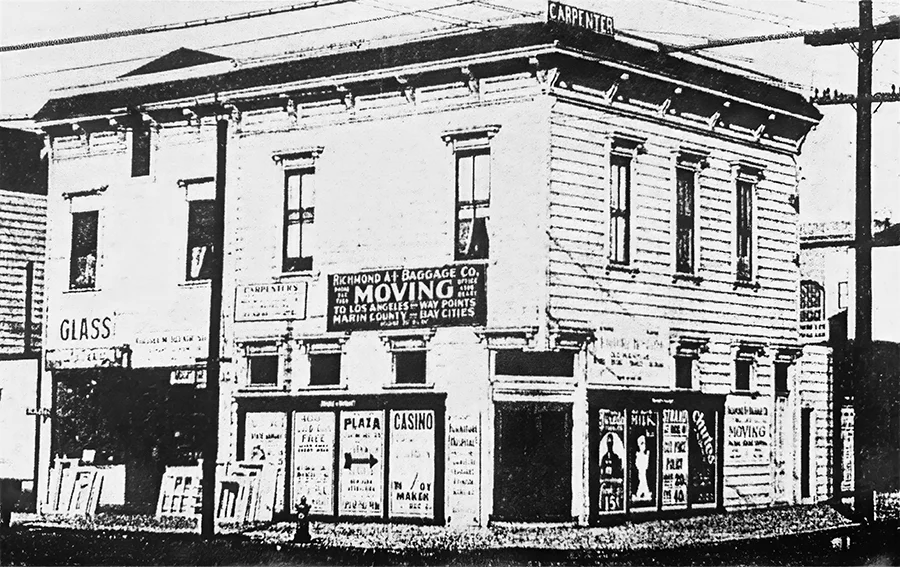
Farrells Dance Hall, where Star of the Sea Mission’s Masses were held on the second floor in 1887
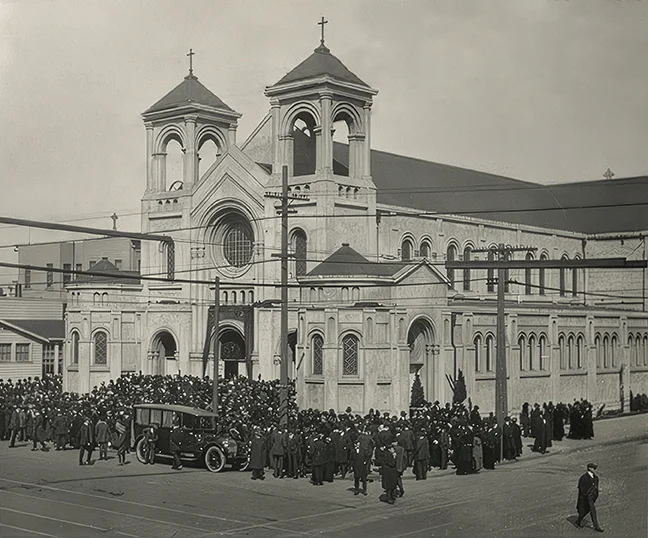
The Reinforced Concrete Church of 1914
By 1870 sports fans had built the Bay District Track for horseracing around Arguello and Geary, and a few enterprising Irishmen established horse ranches, farms, and public houses among the rolling dunes. At one point there were more horses than people, and then there were more cows than horses and people, but the Irishmen got to work having large families. These families needed a Catholic Church. They had been making the trip to Old Saint Mary’s Cathedral east of Nob Hill, and then to the much closer cemetery chapel of the Holy Cross on Eddy at Divisadero (now a Buddhist Monastery, but still bearing the façade inscription Sanctae Crucis, or “of the Holy Cross”). In 1886 forty-one Catholic families felt “strong enough” to maintain a church of their own. The first Mass was celebrated at Farrell’s Dance Hall at Ninth and Geary on Easter Sunday 1887. Within a year the Irishmen had built their own 500-seat framework building at a cost of $10,000. It would be six years before the church was promoted from mission outpost to fully independent parish.
Father John P. Coyle, the first native San Franciscan to be ordained a Catholic priest, became its first pastor in 1894.
A photograph taken from Strawberry Hill in that year shows some houses around the Race Track with Star of the Sea Church west of them. Behind it an almost unbroken undulation of sand dunes stretches to the Pacific Ocean. Father Coyle worked hard to build the new parish and pastored the community through the 1906 earthquake, which led to westward city expansion and rapid church growth. He survived the earthquake by only two years, and in 1908 Archbishop Riordan realized he needed a man of vision and energy for the growing community.
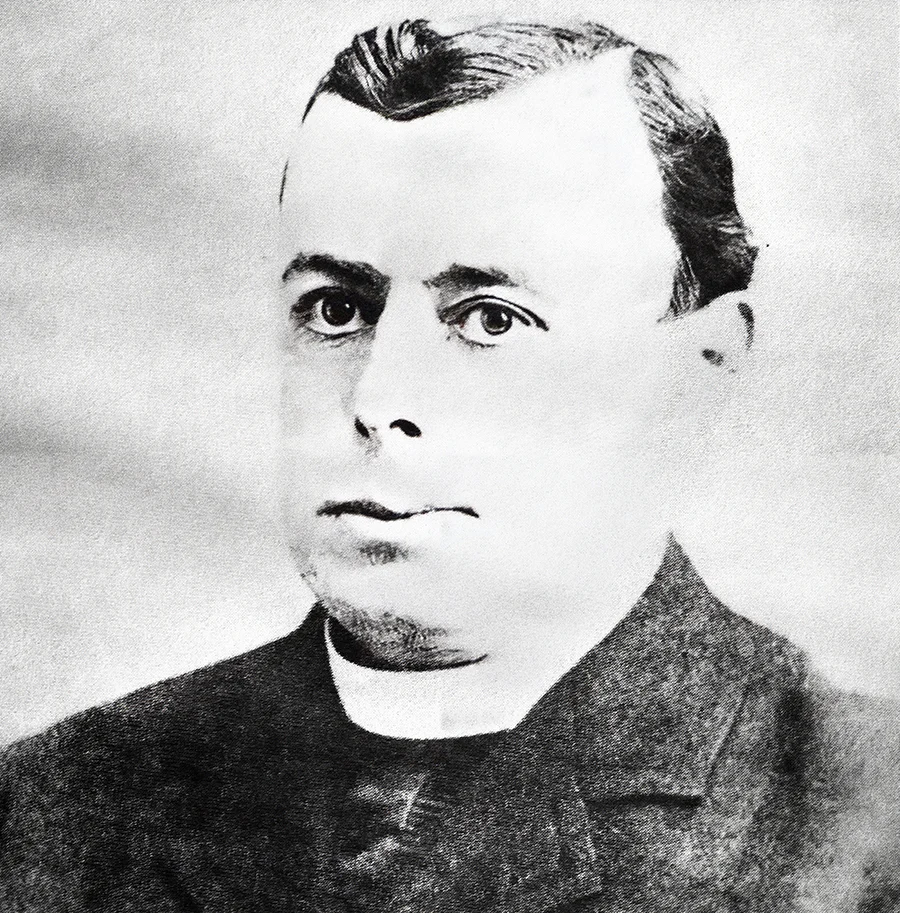
Fr. John Coyle
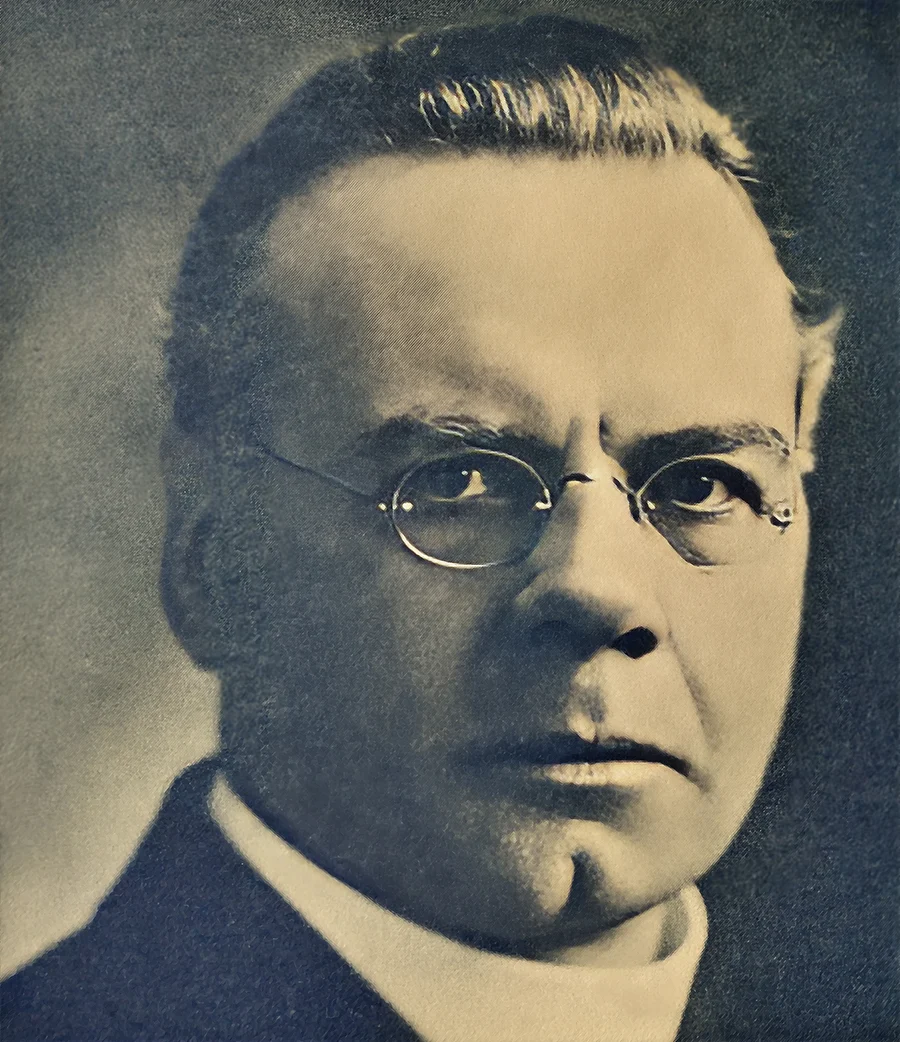
Fr. Philip O’Ryan
A gifted young priest from Country Tipperary, Father Philip O’Ryan, became the second pastor of Star of the Sea Parish. He set about bringing a measure of discipline and gentility to the men and women of the “Outside Lands.” They described their pastor as a man of tireless effort, a marvelous teacher who was a gentle, loving guide to children and adults alike. In the first year of his pastorate he built a school with the Sisters of St. Joseph, opening Star of the Sea Grammar School in 1909 with 137 parish children.
Star of the Sea Parish has since seen eight more pastors, all of whom have had to respond to the ebbs and flows of demographic shifts and changing attitudes toward organized religion. In recent years the church has grown by offering more traditionally Catholic liturgies, perpetual Eucharistic adoration and other devotions, a reopened Classical Academy, and a Classical High School. The parish serves the poorest of the city with food and clothing weekly, provides affordable housing through its former convent building, and by the grace of God, looks forward to a bright future.